Wildlife & history in the gardens
An old, wild place
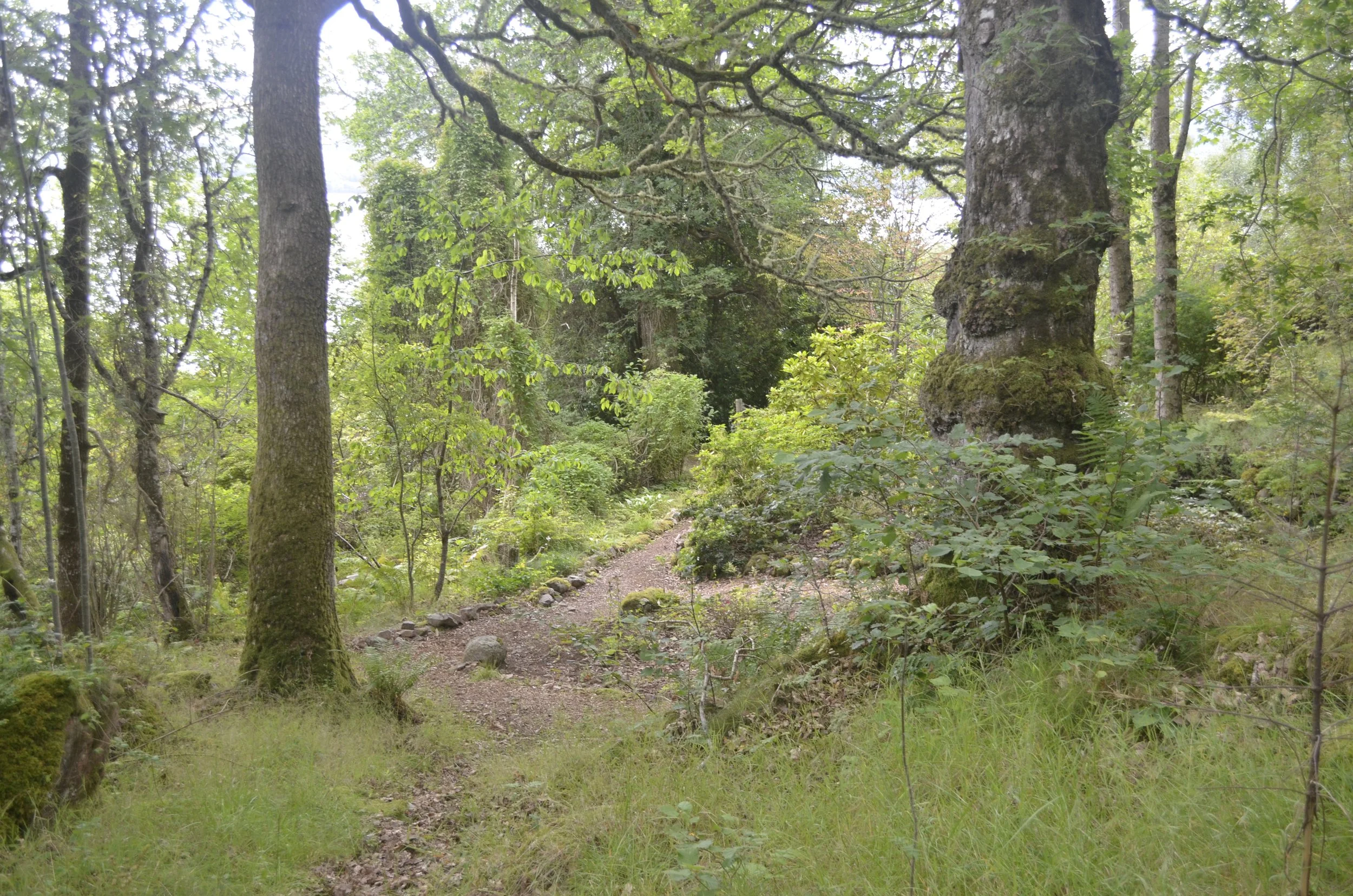
The garden is worth a visit at any time of year – although we’re closed in December and January. From the bluebells of springtime to the evergreens of winter, there’s always something to delight your eye.
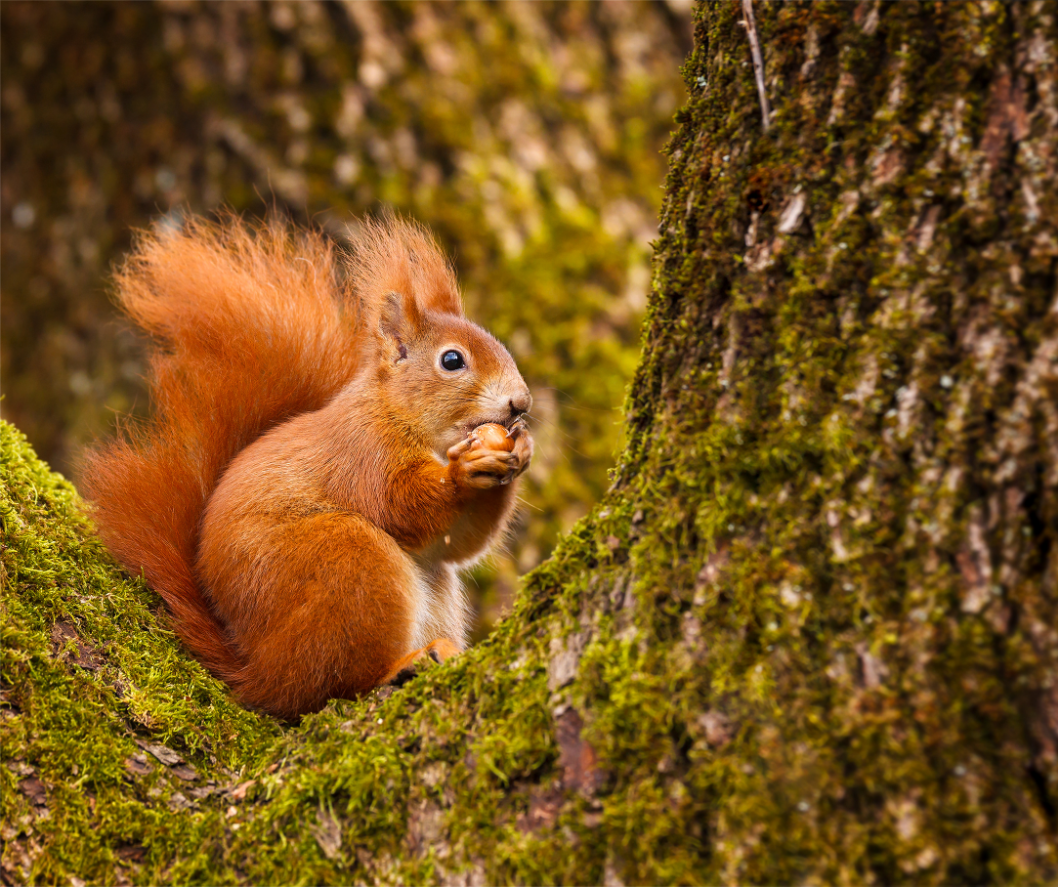
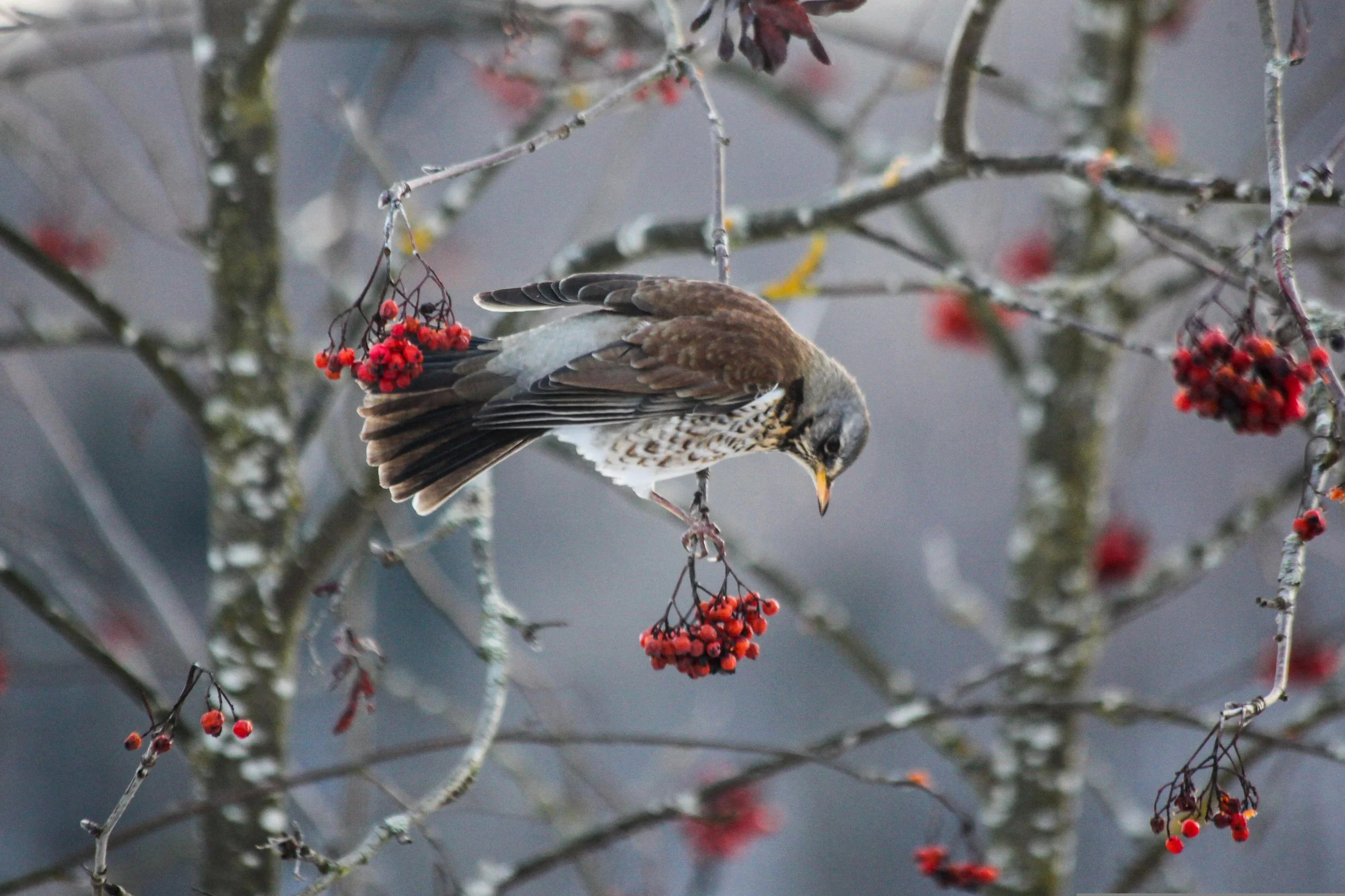
Wildlife thrives in the gardens
Weasels and stoats live in the drystone walls, along with slowworms, lizards, and adders. You might see red squirrels in the trees and pipistrelle bats and pine martens are on the move at dusk.
Badgers live in the Woodland Trust property over the stream – come at dawn or dusk for your best chance to see them out and about. Otters use the stream as a highway between Loch Ness and Loch Laide in Abriachan, so have a quick glance as you cross the bridge. You ever know what you’ll see.
The property has been free of cats for over 25 years, so there’s wonderful birdlife. Look out for native birds like robins, blackbirds, dunnets, and wrens, and summer visitors like black caps, grey warblers, and house martins.
The butterfly population is healthy with southern species moving north as the climate warms. The comma has only appeared in the garden in the last few years. Look out for peacocks, red admiral, and small tortoiseshell. We’ve also many moths, including dramatic hawk moths.
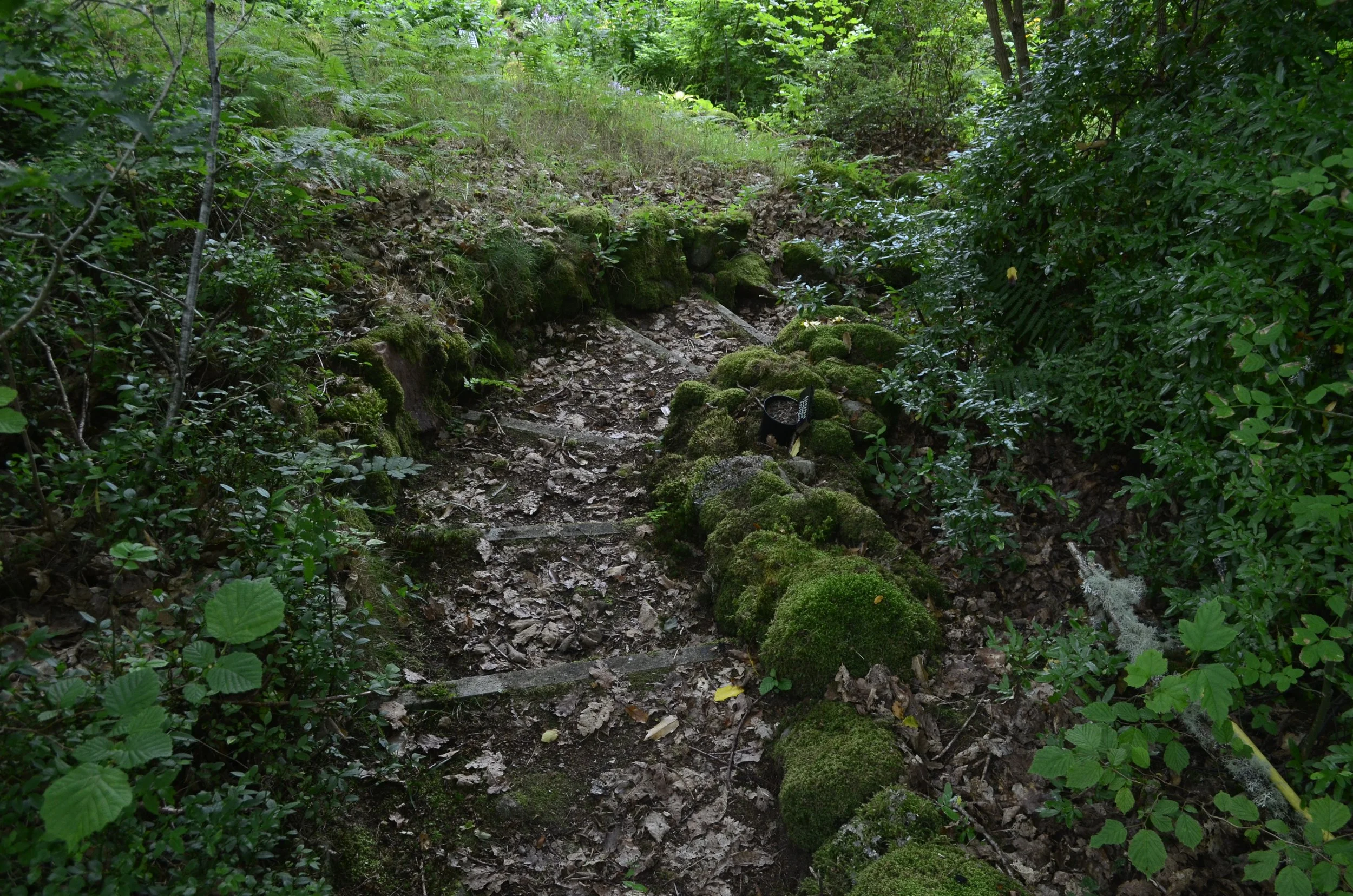
A cradle of early Scottish Christianity
People have lived here for many centuries. We’re just the latest in a long line. The village of Abriachan on the hill above us began as a Bronze Age settlement, and you can visit an ancient village site.
The gardens are in Killianan, which means the place of the church. Killianan first came to prominence when St. Columba travelled from Iona to visit ruler of the Picts King Bridei, at his court in Inverness around AD 580.
As Columba travelled across the Highlands, converting the populace to Christianity as he went, he left monks to establish churches along the way. An open-air church stood where the graveyard is now and early Christian stones in the burial ground date from the sixth century.
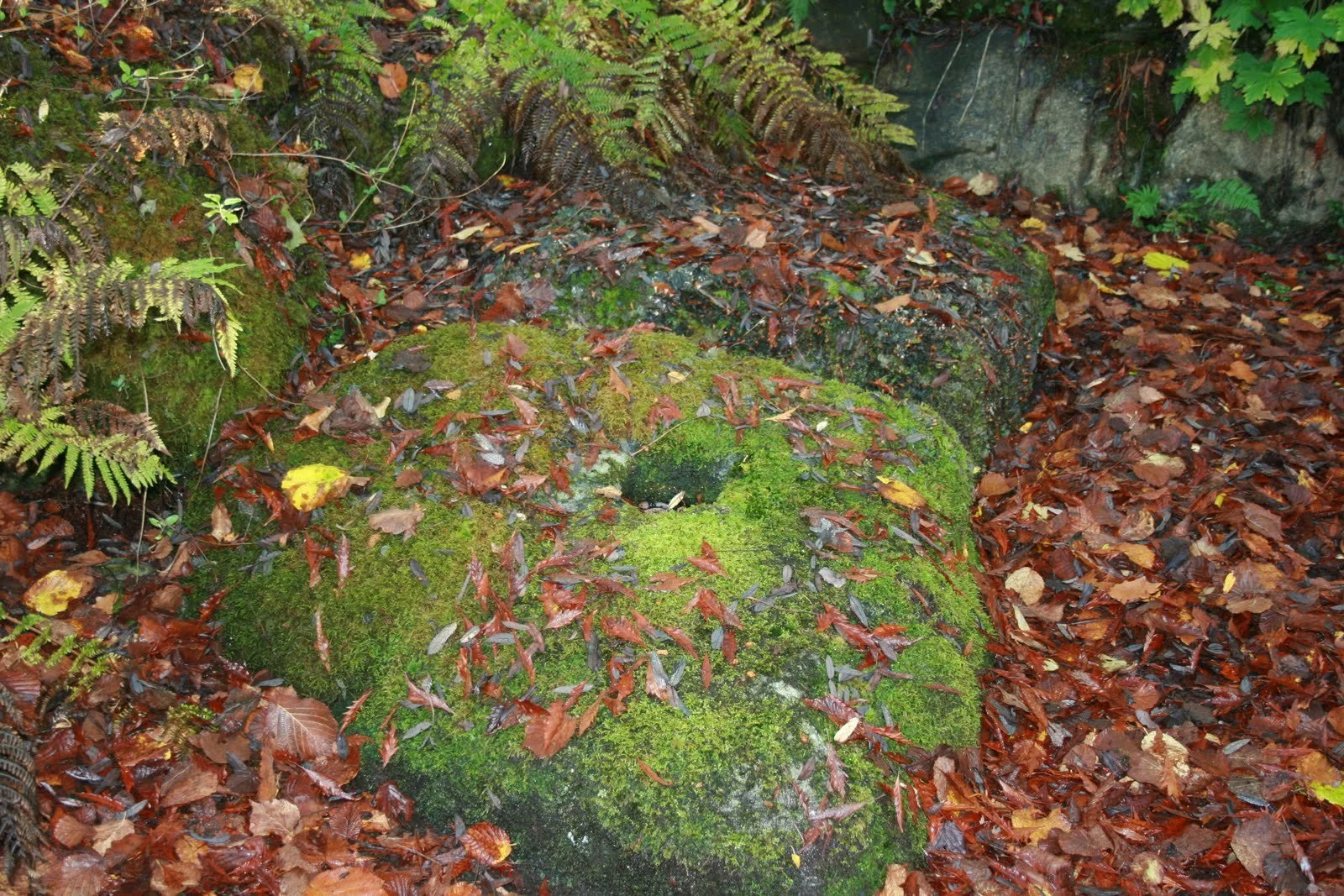
Mysterious, sacred stones
In the woodland gardens is St Columba’s font stone, a triangular rock with a hand carved hole. The legend is the stone never runs dry, and the water is said to ease labour pains for women in childbirth. However, it’s just as likely the hole was created to hold the central supporting pole of a roundhouse.
Local stories also speak of a hand fasting stone on the property, an ancient tradition where couples join hands through a stone and say their marriage vows. But its location has been forgotten, and despite searching for many years, we’ve never discovered it.
Pier keepers and lumberjacks
Although it’s likely there was an ancient settlement here, the oldest building recorded in the area is the pier keeper’s cottage. A boat carried supplies up and down the loch and docked at a pier on the loch shore near the Abriachan turn off. The pier keeper’s cottage was higher up the hill, so the keeper could see the boat on its way across from Dores.
The house at Abriachan Nurseries was built originally as a dance hall for Canadian lumberjacks during the Second World War. They logged the shores of Loch Ness for old growth oaks and Scots pines. Their hall was relocated to this site after the war, where it’s overlooked by some of the few ancient oaks to survive the men who danced within the walls.
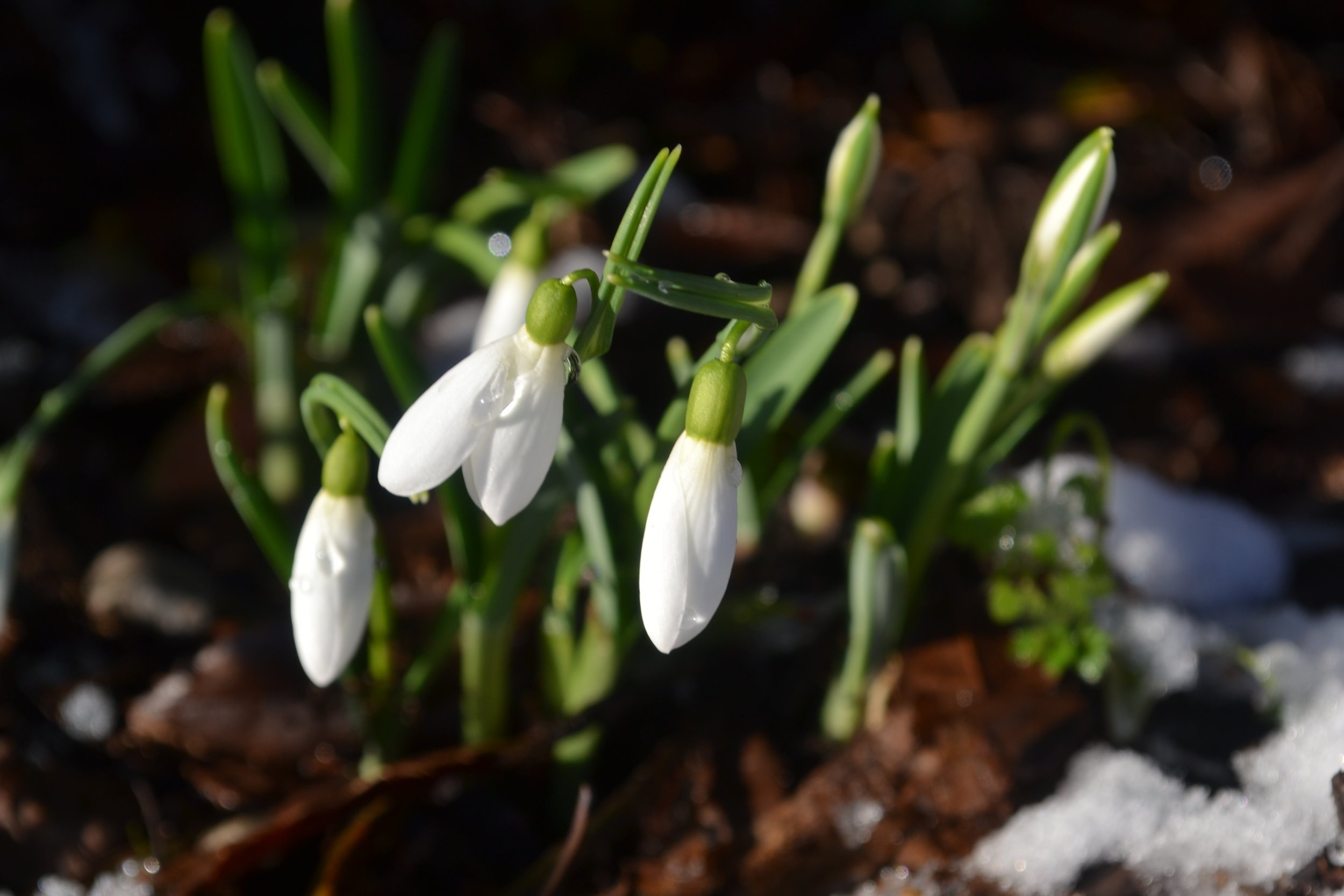
“The spring had brought with it so much new life and the snowdrops looked so beautiful in the crisp Scottish air! We wound around path upon path of fresh, flowery garden smells for almost an hour!”
— April 2011