Building a pond
Many years ago, one of my winter jobs was the transformation of what Margaret termed "The Quaking Bog" into something that once more resembled a wildlife pond. So with a set of waders, a spade and a look of steely determination in my eye, I went forth and did battle.
January/February is the best time for you to tackle your ponds, as it is when you are going to cause least disturbance to wildlife which is at its lowest ebb in the winter months, and also when you are best able to divide your pond plants before they start to grow away in the spring.
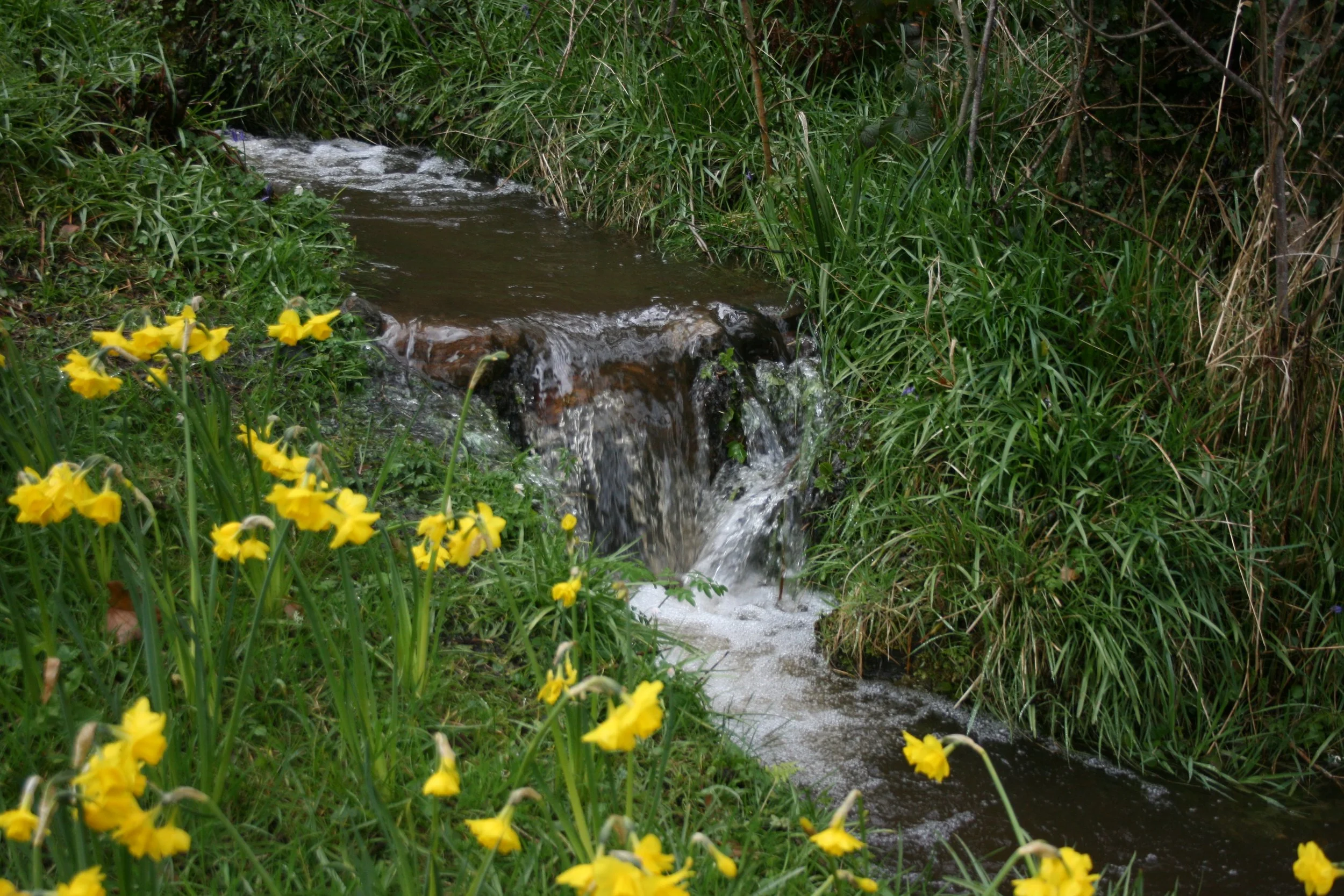
The rapid flow of water through our pond, (connected to a fast flowing burn) brought with it a great deal of silt and other detritus, so I had to dig a great deal of content out, to return the pond to a depth of 3ft, restoring it to a suitable environment for wildlife and readying it for fresh planting in the coming months.
If you own a stand-alone pond which you refill/refresh/pump or otherwise oxygenate, you will probably have far less content to clear out as there will only be the fallen leaves and rotting plant material to deal with, however it is still a job that should be done tri-annually to benefit the health of the pond.
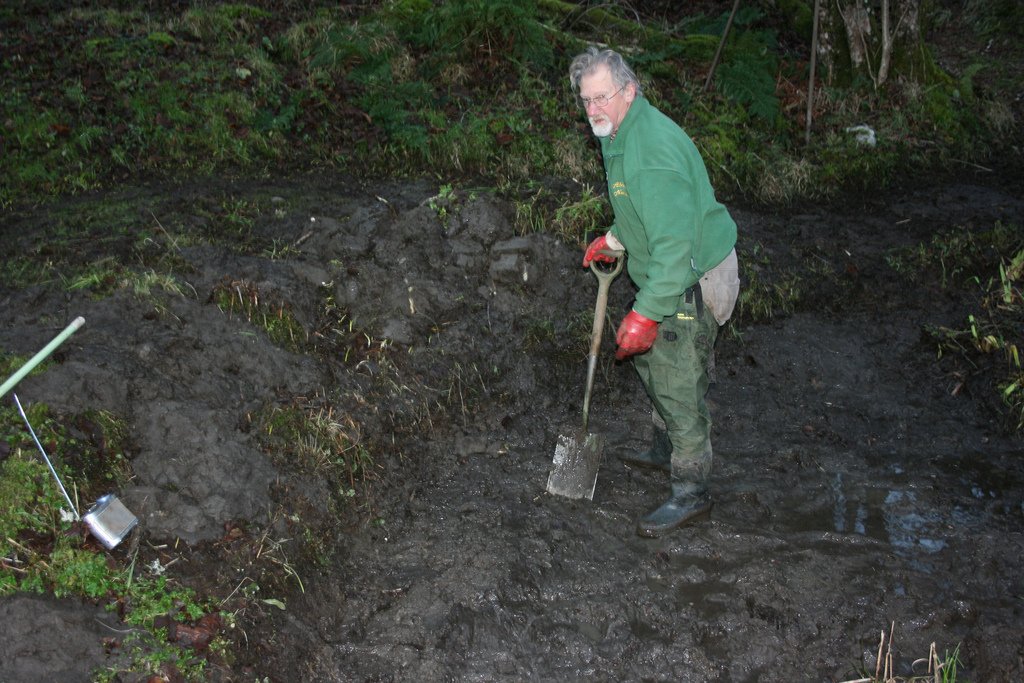
Don digging the pond out in 2014
Here are a few tips to help you in your pond building and planting endeavours:
Waders are a great investment - Digging out a pond from the bank is near impossible and you are like as not to strain your back, and receive no sympathy from friends and family as "You should have known better."
Also, a welly boot, once full of sludgy mud, tends to be more of a hindrance than a help and may lead to you becoming wedged in the gunge in the very centre of the pond, having to perform a complex manoeuvre where you use the spade to lever out one foot so you can make a lunge for the bank, leaving the other welly behind in its new watery home, where it looks at you smugly while you sit and wring out your socks.Stop the flow of water into your pond while you are cleaning it, and if possible drain out most of the water to make your job easier.
I would imagine that if you have fish, transferring them elsewhere at this stage would be a pretty good idea.As you dig out the contents of the pond, shovel it all onto the bank and leave it there for at least a few days, so anything that has been living in the murky depths can wriggle its way back down into the water.
Once the silt is wriggler-free, you can move it elsewhere. I used ours to fill a bed which I planted with Primulas. You may have to mix the pond contents with compost and additional feeding depending on the level of nutrients - I will be adding manure and leaf compost to ours.
Dig deep to get out the roots of all the plants you do not want in your pond. In our case, reeds, rushes and grasses which would, if left, invade the whole pond area. You can keep a small patch of reeds for your wildlife if you like, but there are plenty of alternative plants which wildlife love and which are easier to keep under control.
Divide your lilies, irises and other abundant pond plants, plant them elsewhere, give them to your neighbours, sell them, donate them, barter them..... just ensure you leave enough for oxygenation and habitat.
Hold off on re-planting with new plants until after the last of the hard frosts.
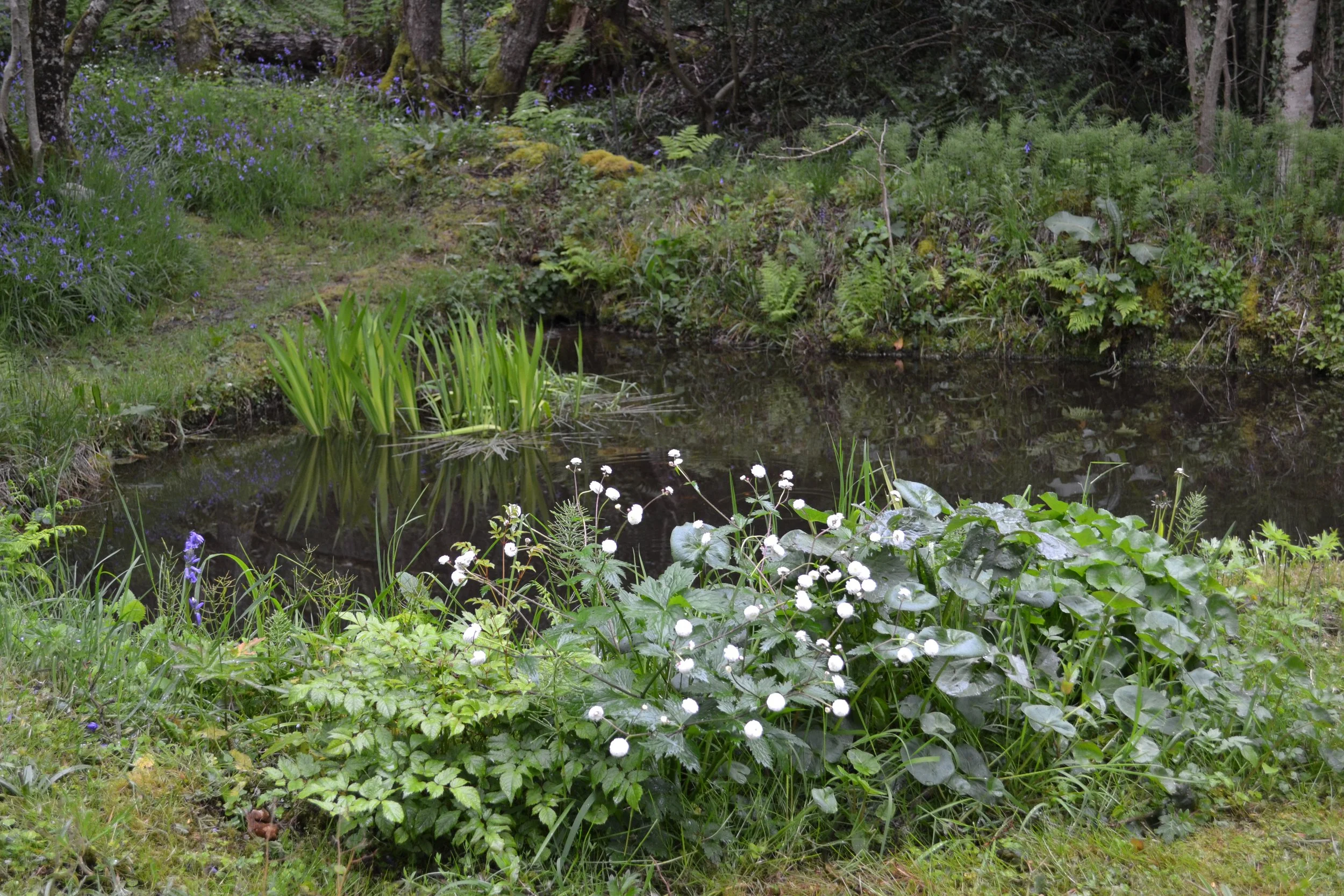
Ensure your pond has at least one gradually graduated side, so frogs, toads, newts and other wildlife can get in and out easily.
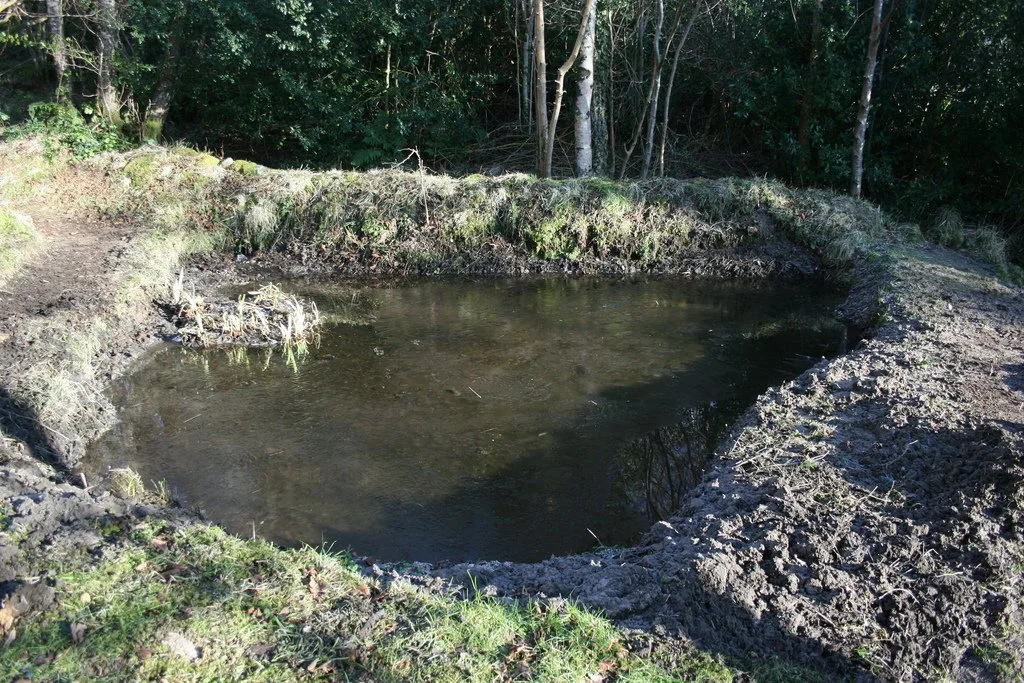
The newly dug pond
As for our pond, it has silted up over recent years, but when I was more attentive our own wee Scottish food chain contained damselflies, dragonflies, water boat men, pond skaters, whirligig beetles, caddis flies, water snails, frogs, toads, ducks, a visiting heron...... and recently observed, the lesser-spotted mud-encrusted Scotsman.
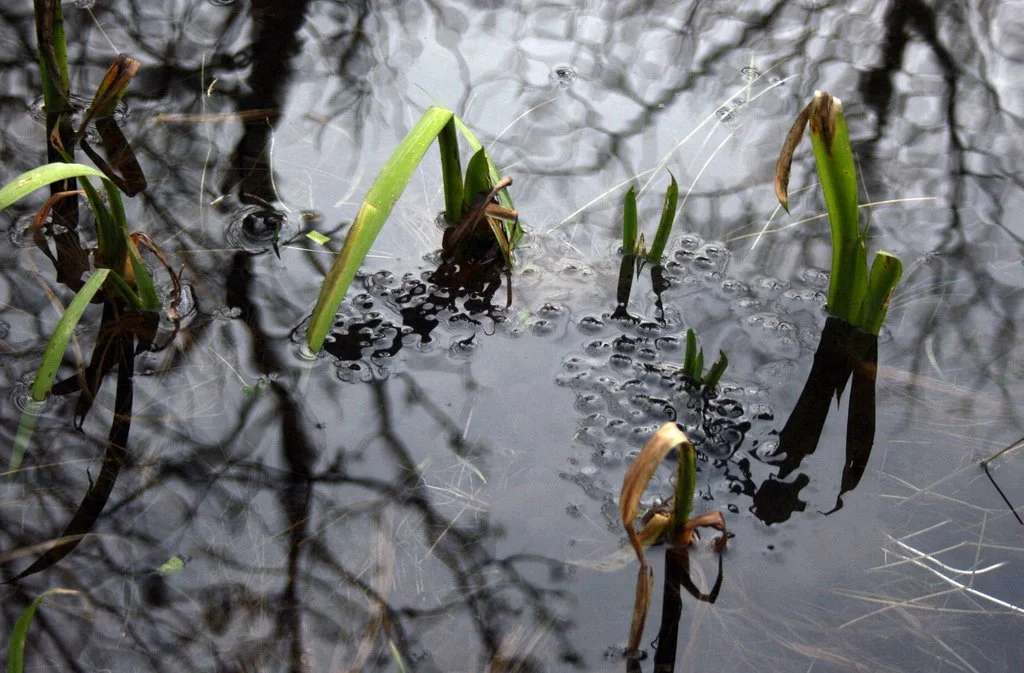
There was also a healthy population of frogs. Each spring the water would boili with their activity, and several big patches of frog spawn would float like translucent sago pudding. Frogs are surprisingly elusive. Despite my best efforts to sneak up and photograph them as they lounged on the banks, all my attempts failed. As I approached the pond I’d hear a chorus of tiny splashes, and I’d be confronted with 32 big eyes on teeny frog faces peeking up at me from the water, as I was once more outwitted by frogs.
Best of luck with your own ponds, they are such a great addition to your garden and as well as providing an environment for animals and insects to live, breed and feed, they give many more birds and animals with a place to drink and bathe.
Don