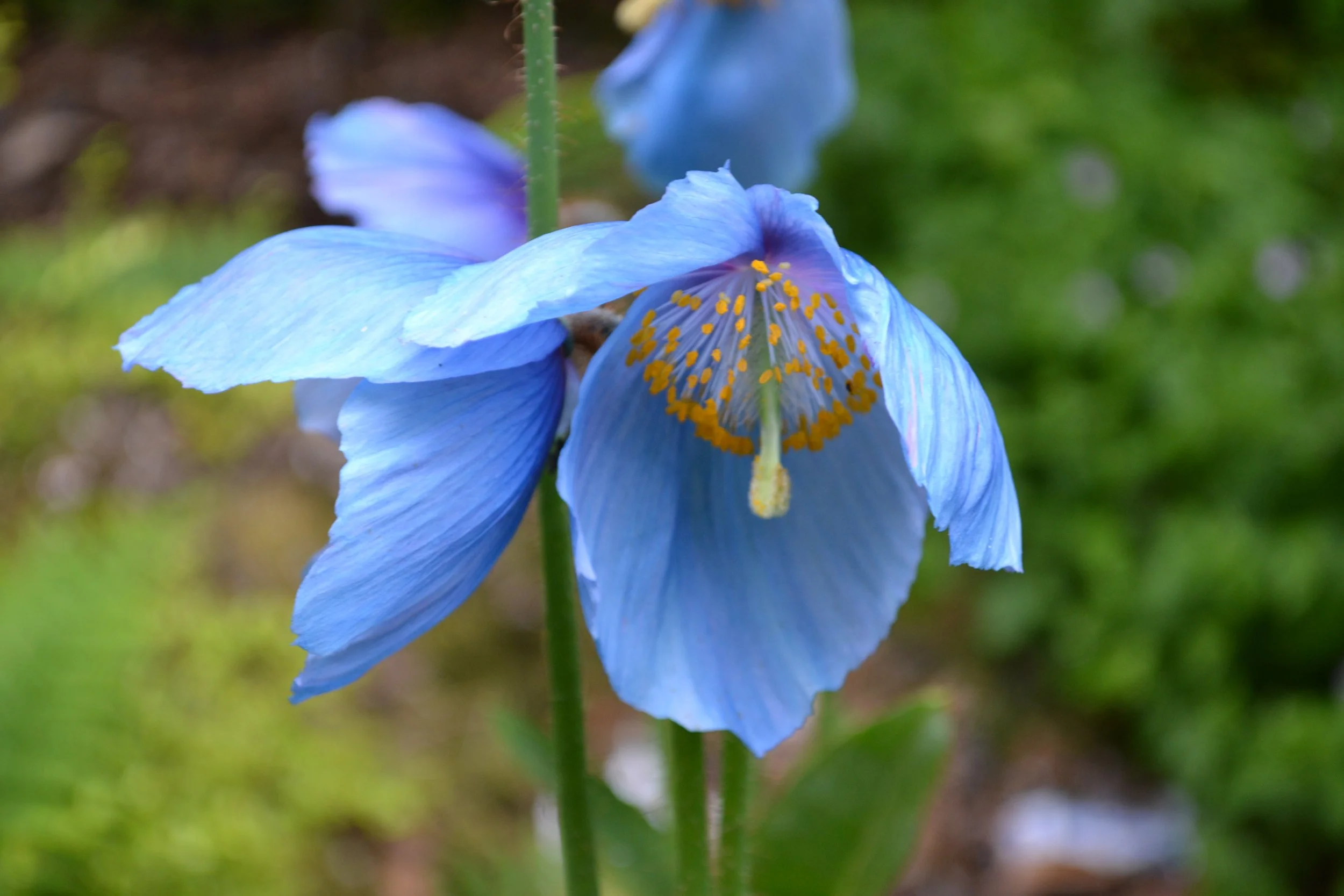
A Himalayan love affair - Meconopsis
Blue poppies are things of dreams. They startle and spell bind each time you see them in flower. The first blooms for this year were there today. They are early. I usually expect them late in May and into early June. The mild, sunny, dry spring has hastened their appearance.
I saw my first Meconopsis back in the 1980’s at Jack Drake’s Nursery. John Lawson who ran the nursery then was a friend and mentor and a great plantsman. He knew how to grow plants to perfection, and a day discovering his trilliums and meconopsis was a rare and lasting treat.
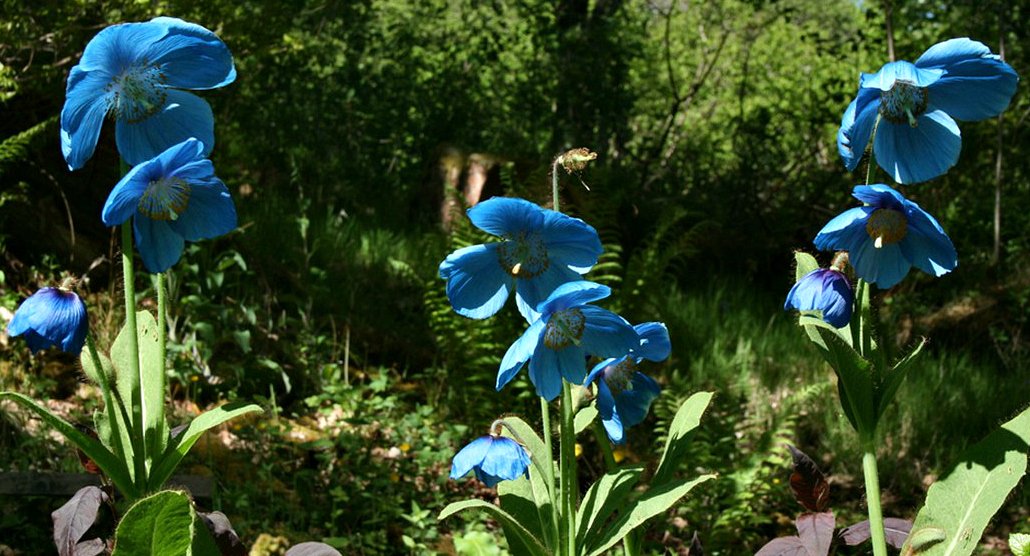
Why are they so entrancing? It’s the quality of the petals. They are large and satin textured. In a spring of white, yellow and then the pinks and reds of our early rhododendrons, suddenly they are there, a heart stopping blue.
There are various varieties and species of course, and it is always a surprise to remember our own common welsh poppy is a meconopsis, but these Himalayan beauties are sublime.
Over the years we’ve tried many meconopsis from seed. Some wonderful, many unsatisfactory. It is because of this that I have just gone to the Meconopsis group web site and renewed our subscription. The Meconopsis group was founded in Scotland, and has undertaken the heroic task of sorting out the confusion of varieties and strains of Meconopsis that were throughout Scotland and UK gardens. Now we grow Meconopsis sheldonii Lingholm, which settle and become perennial for us.
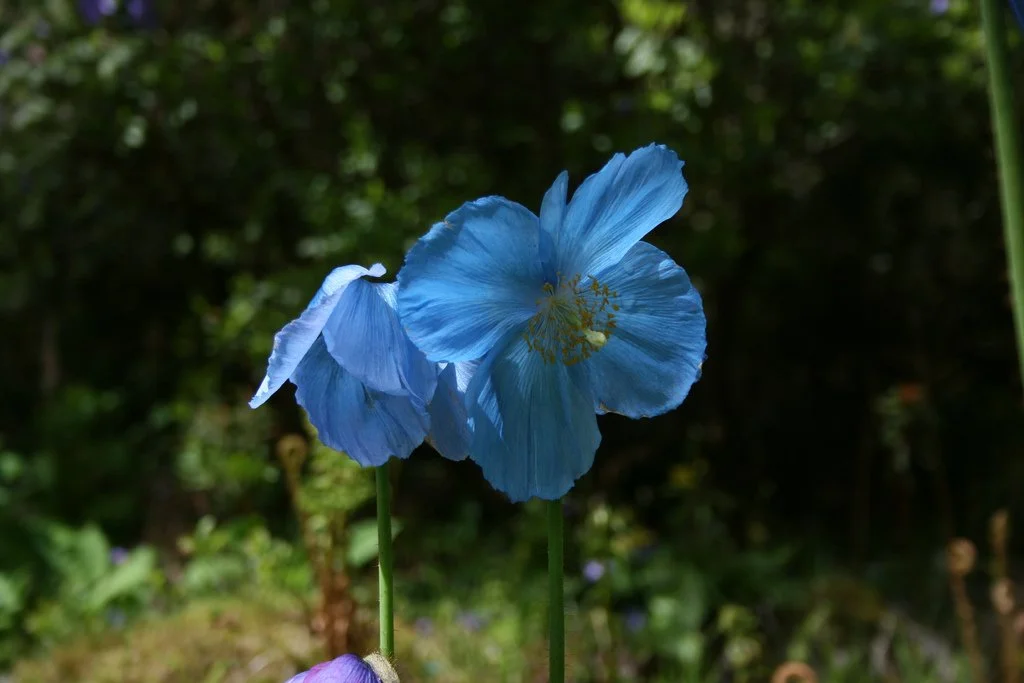
I always tell people to feed, feed, and feed their Mecanopsis. They are gross feeders, loving animal manures if you can get it, or that wonderful smell of spring, dehydrated chicken manure; nothing like it.
Over the bank holiday weekend, I have spent the 2 sunniest days of the year so far in the dappled shade of the woodland area of the garden. This is where the blue poppies are happiest, shade but sunshine too. They like a place where they do not get too dry, and most summers we can provide that alright. Think of them amongst Bowles golden grass, Millium effusum, or amidst a stand of variegated Solomon’s seal Polygonatum oderatum variegatum
Definitely time to get back to seed exchange and visiting other gardens to continue this love affair.